

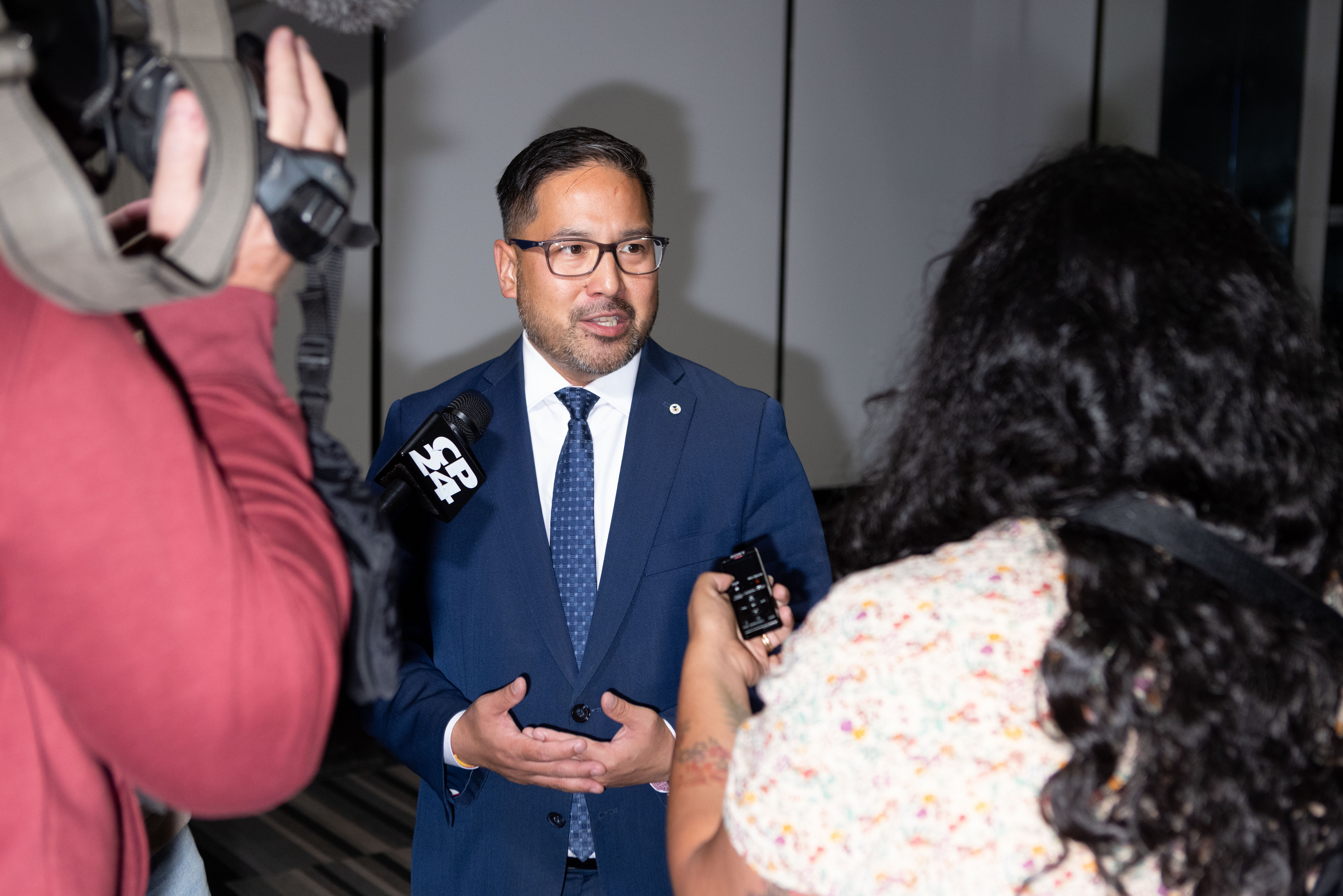

I admit, I’m biased.
Mississauga’s race for mayor is one of the most exciting elections of our time.
As someone who has spent my whole life thinking about how to close the gap between policy wonkiness and political demands, elections can often be disappointing. The biggest loser of every race is usually a good policy idea. Voters are confronted with a series of one-liners and are forced to pick between the one that appears the least bothersome. And in the end, the pundits declare that one candidate’s brand outdid the others.
But people don’t think of their lives as fitting into some politician’s brand, and it leaves the public feeling disillusioned.
This is why Mississauga’s mayoral race has been a flashpoint in the Greater Toronto Area’s political history. As one of the candidates, it’s an honour to be a part of it.
The current and former mayor have turned this election into a battle to settle a personal score. The insult hurling caught the headlines, but as usual: the policy details didn’t even make the byline.
With 12 years as the mayors of Mississauga, Bonnie Crombie and Carolyn Parrish have colluded to raise property taxes in Mississauga a staggering 30% in the last 4 years alone. And somewhere between all the name calling, they both admitted that they plan to raise them again — each insisting that they would be better at raising them than the other.
When I proposed a 2-year tax freeze — something that Vaughan, Windsor, and other cities have been able to achieve, they dismissed it as ‘inexperience’. The same accusation was thrown around when I suggested modernizing our law enforcement to meet the demands of today, including non-police emergency responders specialized in mental health. We heard it again when I unveiled my housing plan, with a commitment to meet Mississauga’s annual housing target for the first time ever — something both mayors have failed to do.
To their credit: I don’t have any experience spending tax dollars on vanity projects while residents across the city struggle to put food on the table.
I don’t mind being cast as the outsider candidate in this election, because I am. My platform is not a series of vague whims of subways and convention centres that we could build if we won the lottery.
My platform was decided while I sat in traffic for an hour to get my kids from swim meets to baseball games because our roads have never been more congested. It’s designed to help my wife and sister — both nurses — get home from their shifts during off-peak hours on transit. It’s about giving working families a break because we shouldn’t have to tighten their belts before city hall does.
Early in the campaign, my team and I wondered if we’d be seen as the radicals. When you’re in a race against two establishment politicians, it’s easy to slip into that moniker.
Fortunately, someone else assumed the role: the voters.
Mississauga has had a historically low voter turnout for municipal elections. In 2024, only 25% of the population came out to cast a ballot, a modest increase on previous elections. This is hardly surprising: Mississauga is famous for having proudly elected the same mayor in 12 consecutive elections. We weren’t disillusioned, just content with Hazel McCallion’s leadership.
But times are changing, and so are Mississauga voters.
It’s widely understood that the current and former mayors want the chair so that the other can’t have it. They seem insulted by the idea that they should have to campaign for the job at all, which is probably why they haven’t released complete platforms.
And the voters know that too. Which is why a 78% increase in voter turnout in the advanced polls was such a powerful statement. With 75-80% of the population historically staying home on election day in Mississauga, voting is a radical act, and the fact that 19,000 more voters came out in advance compared to 2024 is thunderous.
For the first time in a long time, Mississauga seems to have something to say. In and of itself, this is significant. 44,000 people don’t go out to vote early for more of the same.
If it’s a mark of inexperience — or radicalism — to provide a costed plan for a tax freeze, to strategize a way to make our communities safer, to map out a transit system that gets people around faster, then I accept it. Moving forward is a threat to those who are determined to stand still.
This election turns on the voter who usually stays home, but has now decided to cast a ballot. The establishment politicians are banking on those people staying home again.
This is Mississauga’s radical moment. And the movement has already begun.
Alvin Tedjo is running for Mississauga mayor. We’ve invited the city’s three leading mayoral candidates to make their closing arguments to voters in an op-ed ahead of Monday's election.